Momil Is Not Even the Correct Word. Every Restaurant in Seoul Uses It Anyway.
The kettle came to the table first. I thought it was tea. I poured some into the paper cup and drank it. It was broth, and it was cold. Nobody told me. At a momil restaurant, nobody tells you anything.
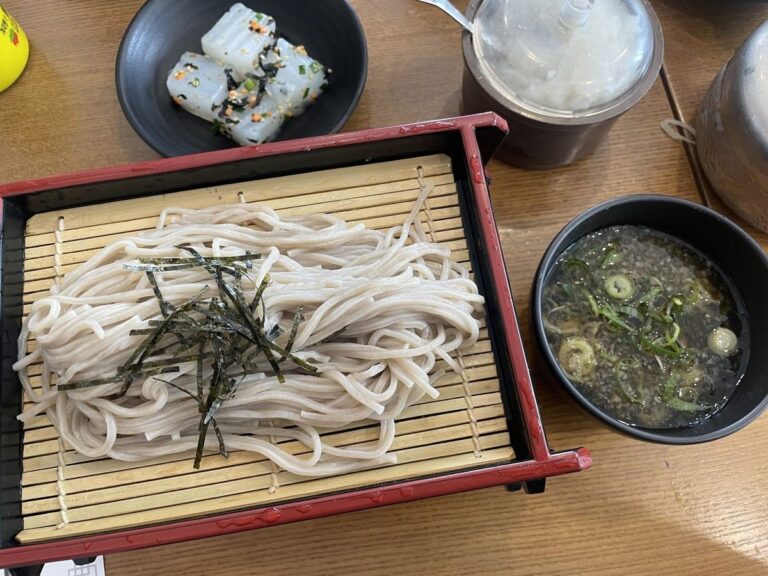
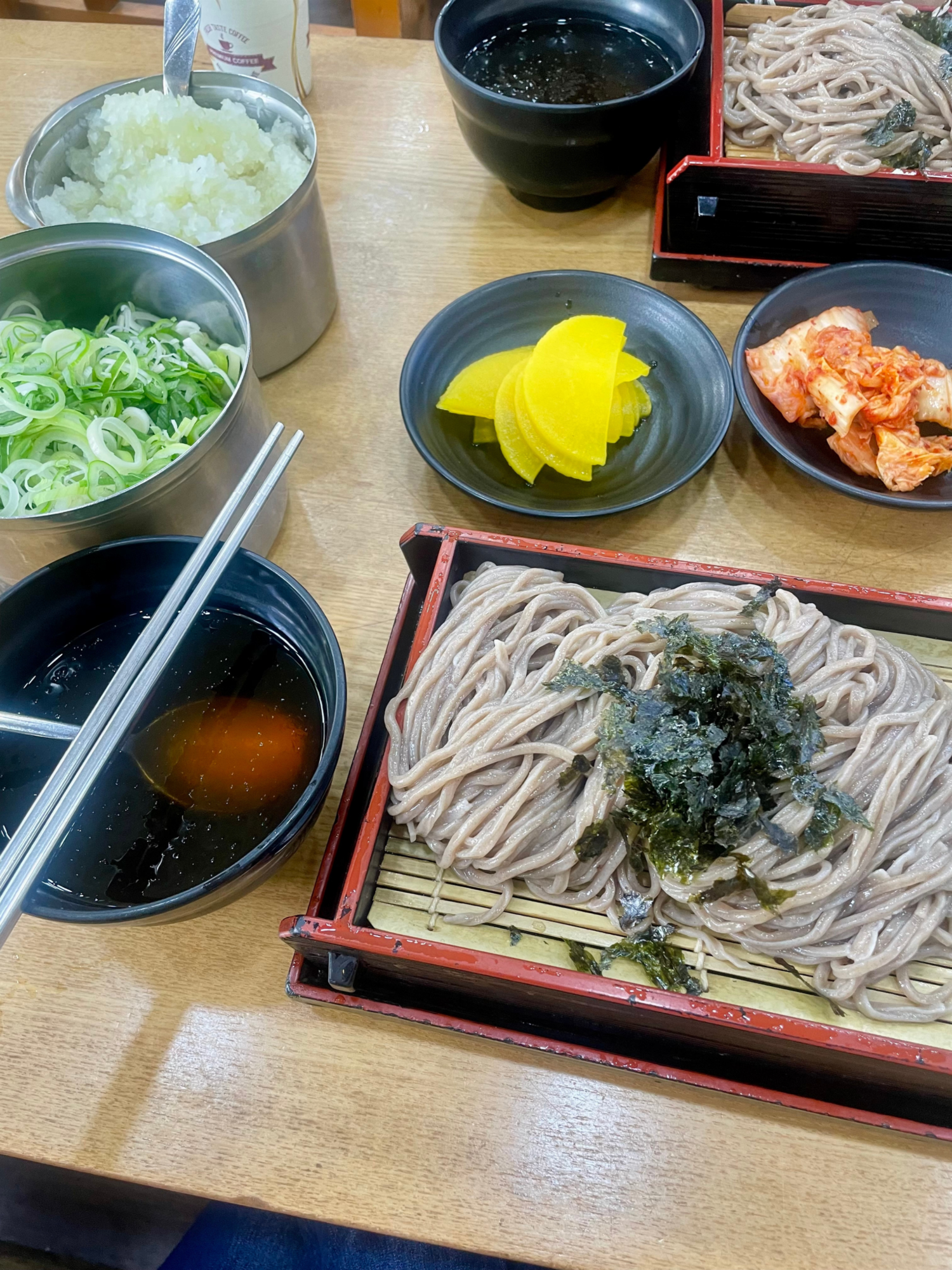
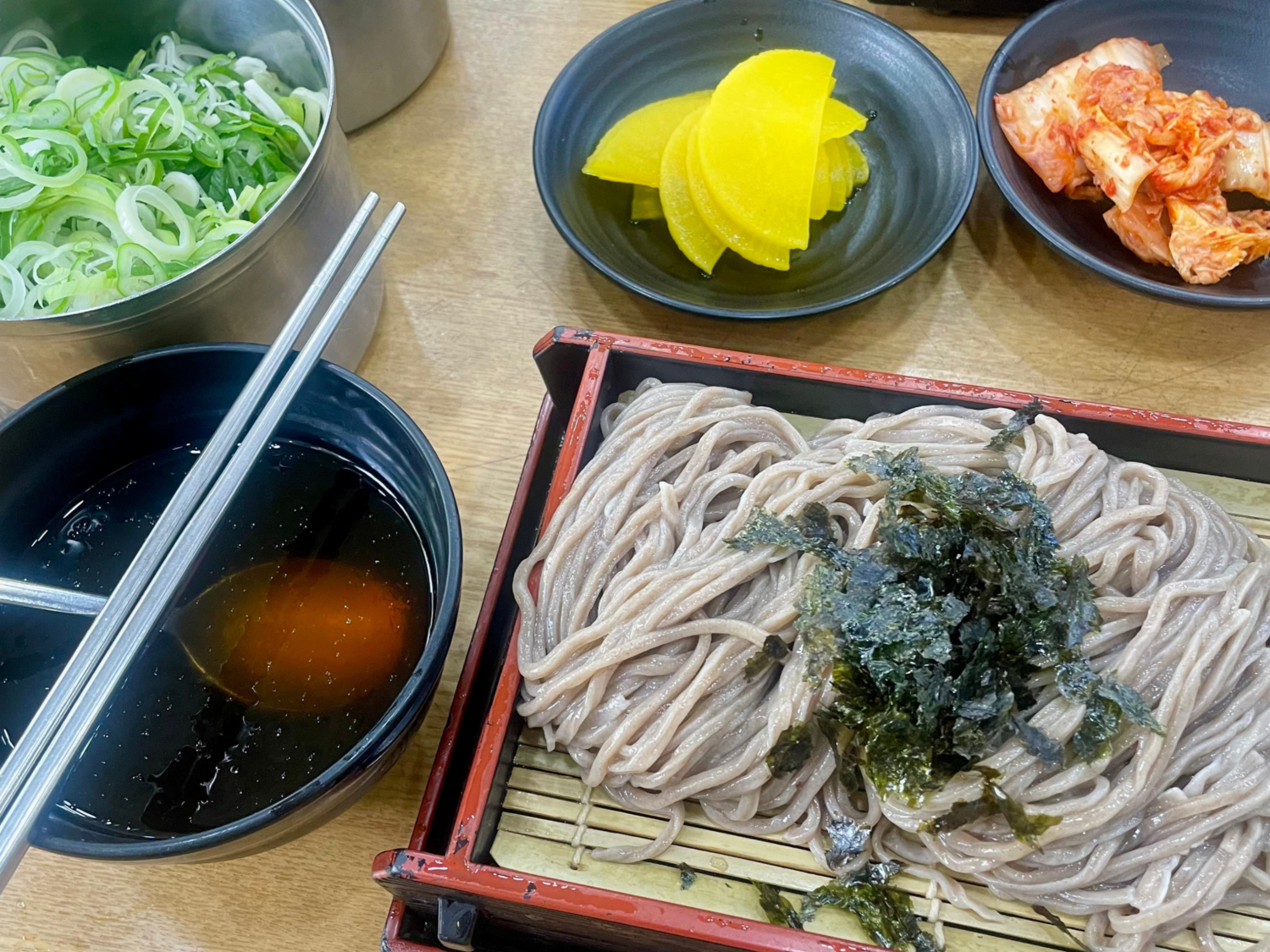
I ordered pan-momil. It came on a bamboo tray, two piles of gray-brown noodles, cold. One black bowl of dipping broth with chopped scallions floating in it. Yellow pickled radish on the side. It looks like not enough food. Somehow it is enough.
The word is technically wrong
In the dictionary, the buckwheat plant is called memil. Momil is an old regional form of the same word. The standard is memil. But the restaurant signs in Seoul say momil. The menus say momil. The customers say momil. If you order “cold memil noodles” you sound like a language textbook. So the wrong word won. Nobody is fighting it.
What buckwheat cannot do
Buckwheat has almost no gluten. Pure buckwheat dough does not stretch. It breaks. So wheat flour goes in. Japan has a famous ratio called nihachi, two parts wheat and eight parts buckwheat, and shops advertise it with pride. Korean dried noodles from the supermarket usually go the other direction, about 30 or 40 percent buckwheat. The dark specks in the noodle are the husk. People look for the specks. The specks mean it is real. Modern milling can remove them completely, but then the noodle looks fake, so nobody removes them.
A Japanese dish that turned Korean
Cold noodles on a bamboo tray came from Japan, during the colonial period. In Japan it is zaru soba or mori soba. Then Korea changed it, slowly, in one direction. Sweeter.
The dipping broth here is noticeably sweeter than in Japan. You get a small mound of grated radish and you stir it into the broth. In Japan one serving is one flat tray. Here the same amount of noodles gets stacked into two or three thin layers, so the table looks generous. And there is the kettle. It sits on the table, sweating, because what is inside it is cold. It is the dipping broth itself. You pour your own bowl from it and then you keep pouring. Every round of noodles carries water in with it, so the broth thins as you go and the bowl runs down before the tray does. The kettle is there so you can keep correcting it. In Japan the warm liquid arrives at the end, the water the noodles were boiled in. Here you get a whole kettle of cold broth from the start. We do not do small portions of anything, including broth.
The three names people say
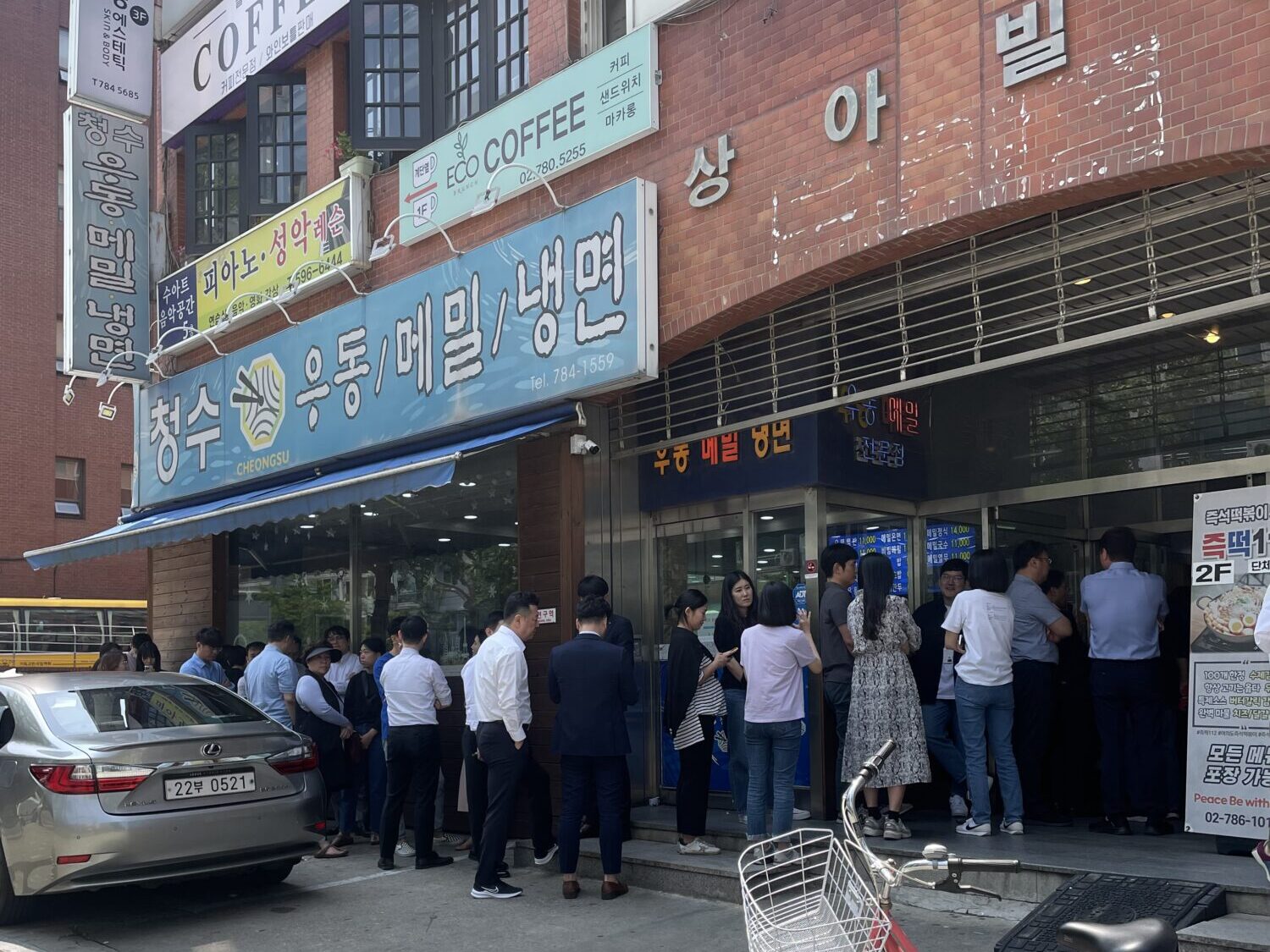
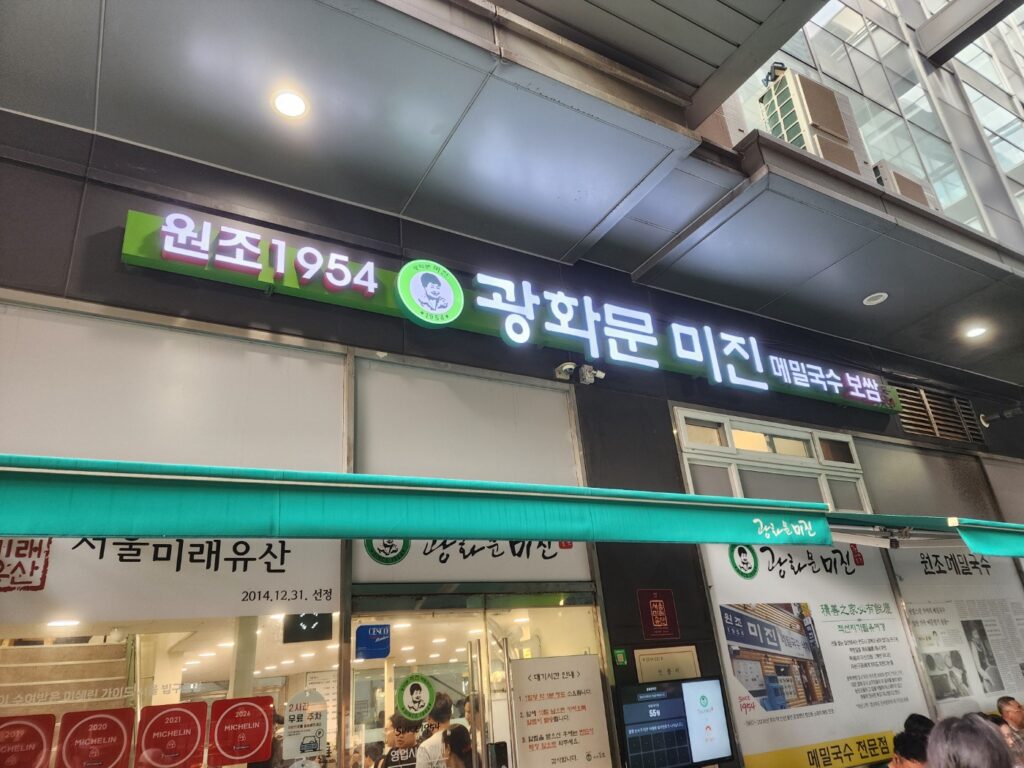
Ask an office worker in Seoul about momil and three old names come up. Mijin, near Gwanghwamun, has been making memil noodles since 1954. Cold noodles are 12,000 won, the broth comes in a kettle, and one serving arrives as two stacked trays with seaweed and grated radish. Songok, in Bukchang-dong near City Hall, has been open since 1961. Pan-memil is 11,000 won there now. It was 10,000 won last year. Their noodles are a little thicker and paler than the others. Songok is also the one of the three that spread — there are branches now, and the price is not the same at all of them. I ate at the Sinsa one, where the same dish is 12,000 won and nobody explains that either: Songok Lists Four Buckwheat Noodles and Translates Every One Into English. Cheongsu, in Yeouido, opened in 1988 and feeds the finance people. The broth there is milder, less sweet, and the owner still makes the noodles.
Every list of the “three great momil houses” is a little different. These three names survive on most of them. All three are old, all three are plain rooms, and all three are full at noon in summer.
How to eat it
Put the radish and scallions into the broth. Take some noodles, dip about half way, eat. Do not soak them long. The noodle should still taste like buckwheat, a little nutty, a little rough. Top the bowl up from the kettle whenever the broth goes thin, and it will. The pickled radish is for resetting your mouth between rounds.
The word is wrong and the dish is borrowed. Seoul does not care. Seoul is busy eating.