Songok Lists Four Buckwheat Noodles and Translates Every One Into English. You Still Cannot Tell Them Apart.
This is not a restaurant anyone travels for. It is on the second floor of a building in Sinsa-dong, and at noon it fills with people who work within a five-minute walk. I am one of them. In summer I go there because the alternative is standing outside in the heat waiting for something better, and there is nothing better within that five minutes.
That is the whole recommendation. If you happen to be near Garosu-gil around lunchtime, this is what the neighborhood actually eats.
Four noodles, two prices
The board on the wall lists momil four ways, and every line has an English translation under it:
| 판메밀 (2판) | 12,000 | Buckwheat noodles on a wooden plate (2 plate) |
| 냉메밀 | 12,000 | Cold buckwheat noodles |
| 온메밀 | 11,000 | Warm buckwheat noodles |
| 비빔메밀 | 11,000 | Spicy buckwheat noodles |
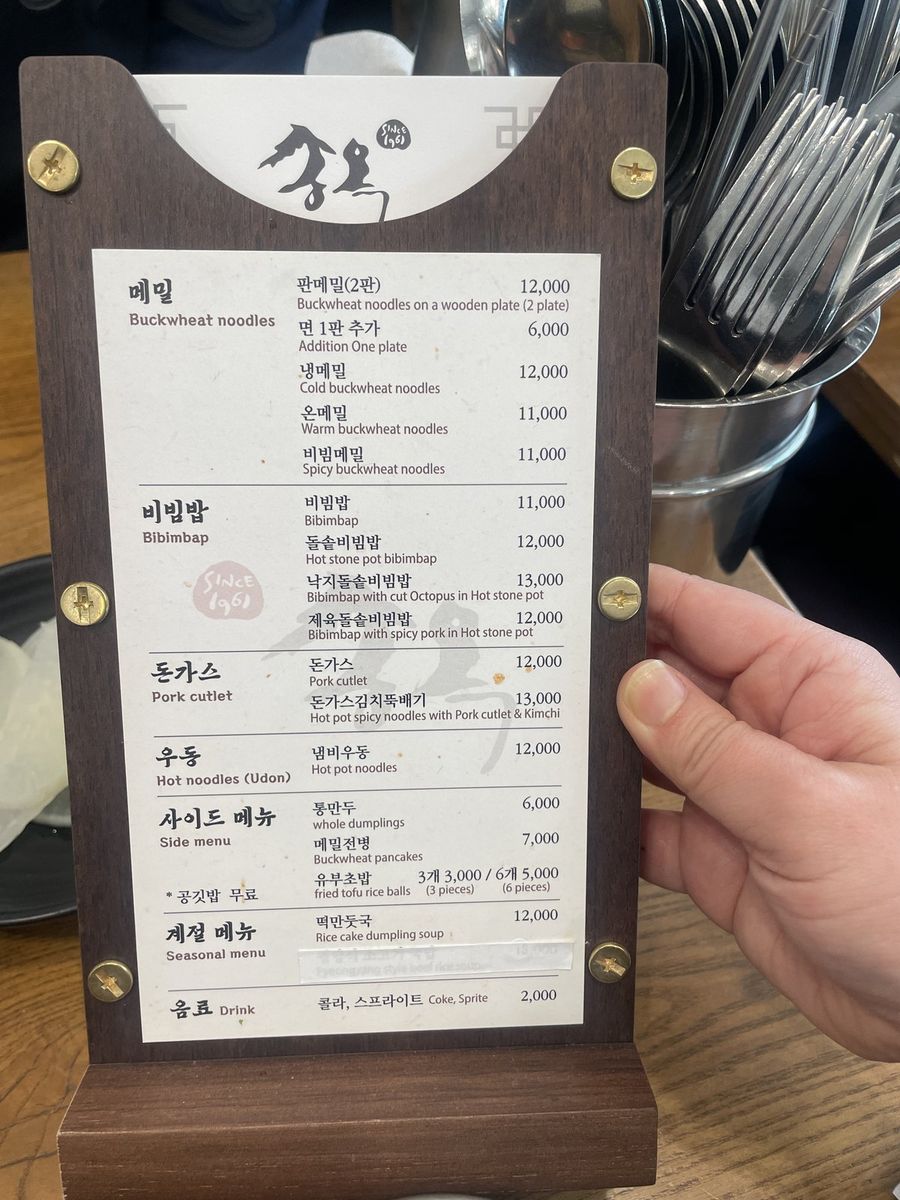
Read that as a foreigner and see how far it gets you. The warm one is warm and the spicy one is spicy — fine. But the first two are both cold, both 12,000 won, and the only thing the English gives you is that one of them arrives on a wooden plate. That is the difference in furniture, not in food.
The actual difference is that one of them is finished and the other one is not.
Note also that cold costs more here. The two cold versions are 12,000 won and the warm and spicy ones are 11,000. In a country where buckwheat noodles are a summer food, the summer versions carry the premium. Nobody has ever explained this to me either.
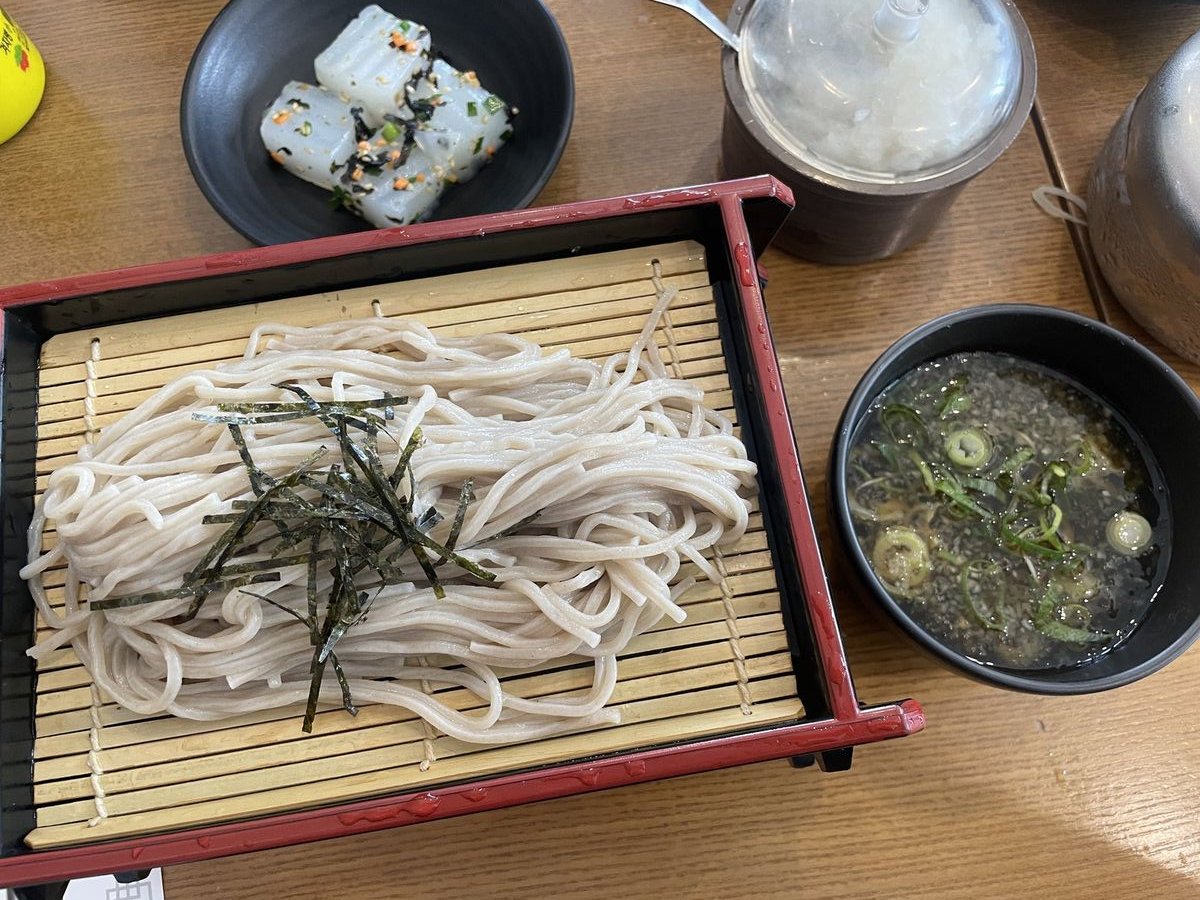
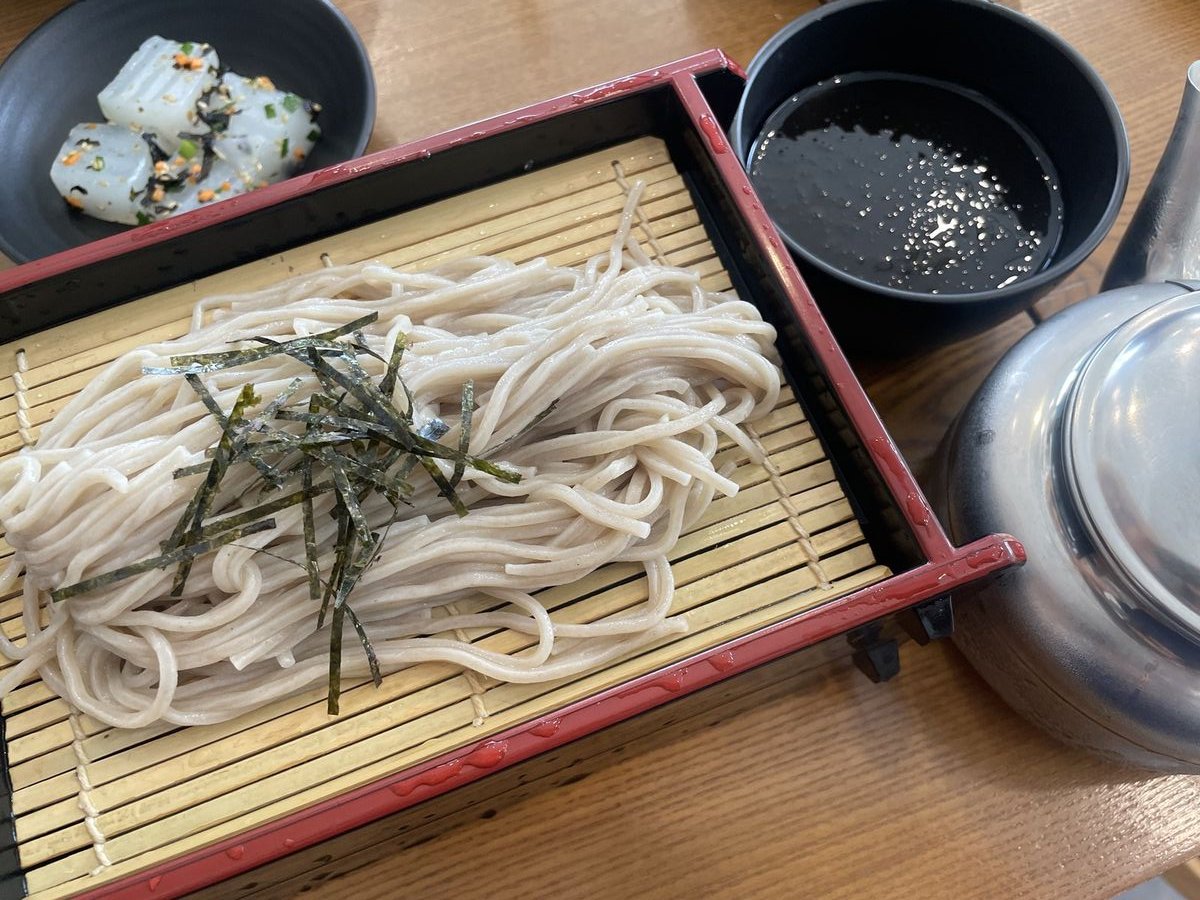
Pan-momil arrives as parts. Noodles on a bamboo mat in a red lacquered tray, dried seaweed over them. A bowl with the broth already in it, filled a little under halfway. A metal kettle holding more of the same broth. That is the whole delivery.
The scallion and the radish are already on the table when you sit down, and they stay there — a deep tub of chopped scallion with tongs in it, a pot of grated white radish with a ladle. They are refilled if you run them out.
This is the part that reads wrong from outside. Tubs of vegetables sitting on a Korean table look like banchan, the free side dishes you eat as they are. These are not that. They are components. They go into the broth, and how much goes in is entirely your call — which is a decision the restaurant has quietly handed you without saying so.
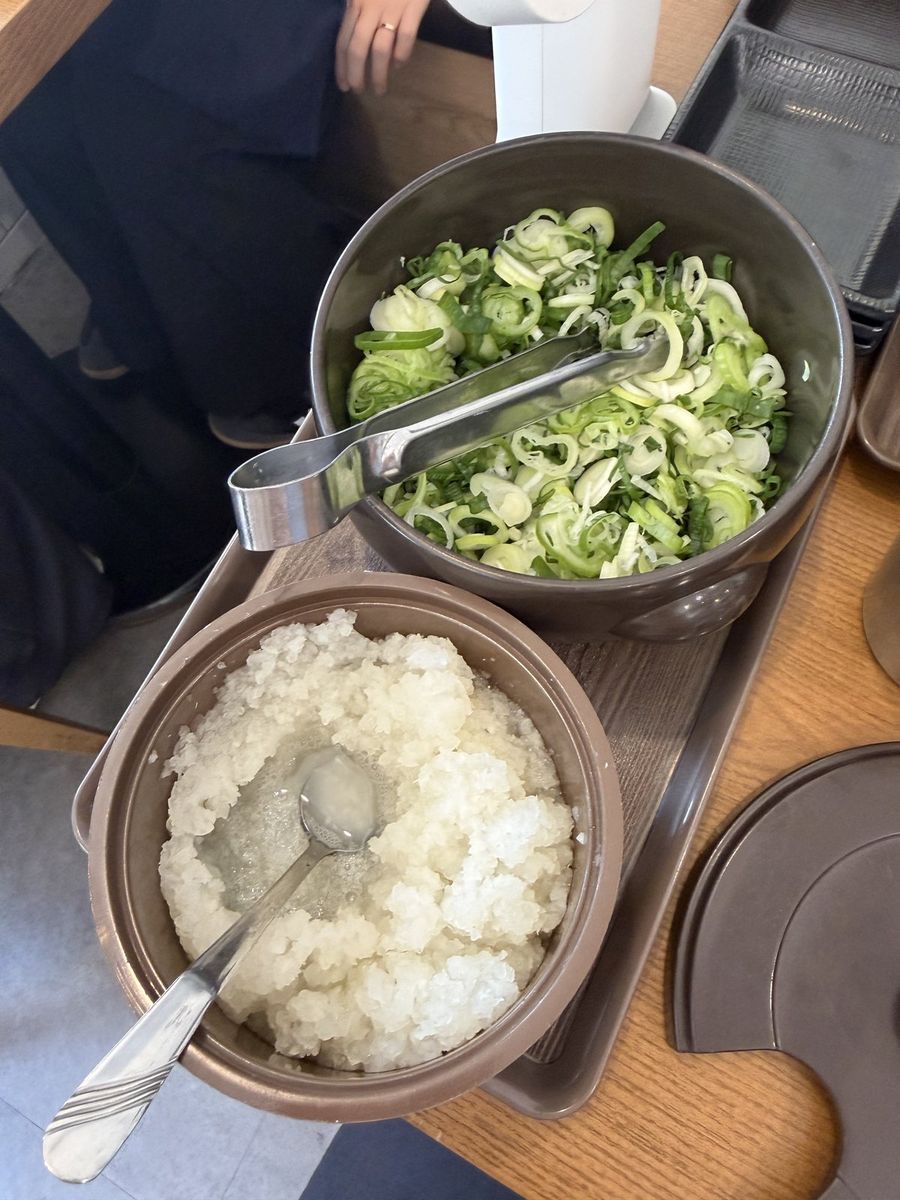
You build the thing yourself. Radish and scallion into the bowl, then broth from the kettle when you want more of it — the broth is cold, not tea, not something to drink on its own. Take a few strands of noodle, drop them in, lift them straight out, eat. Then do it again.
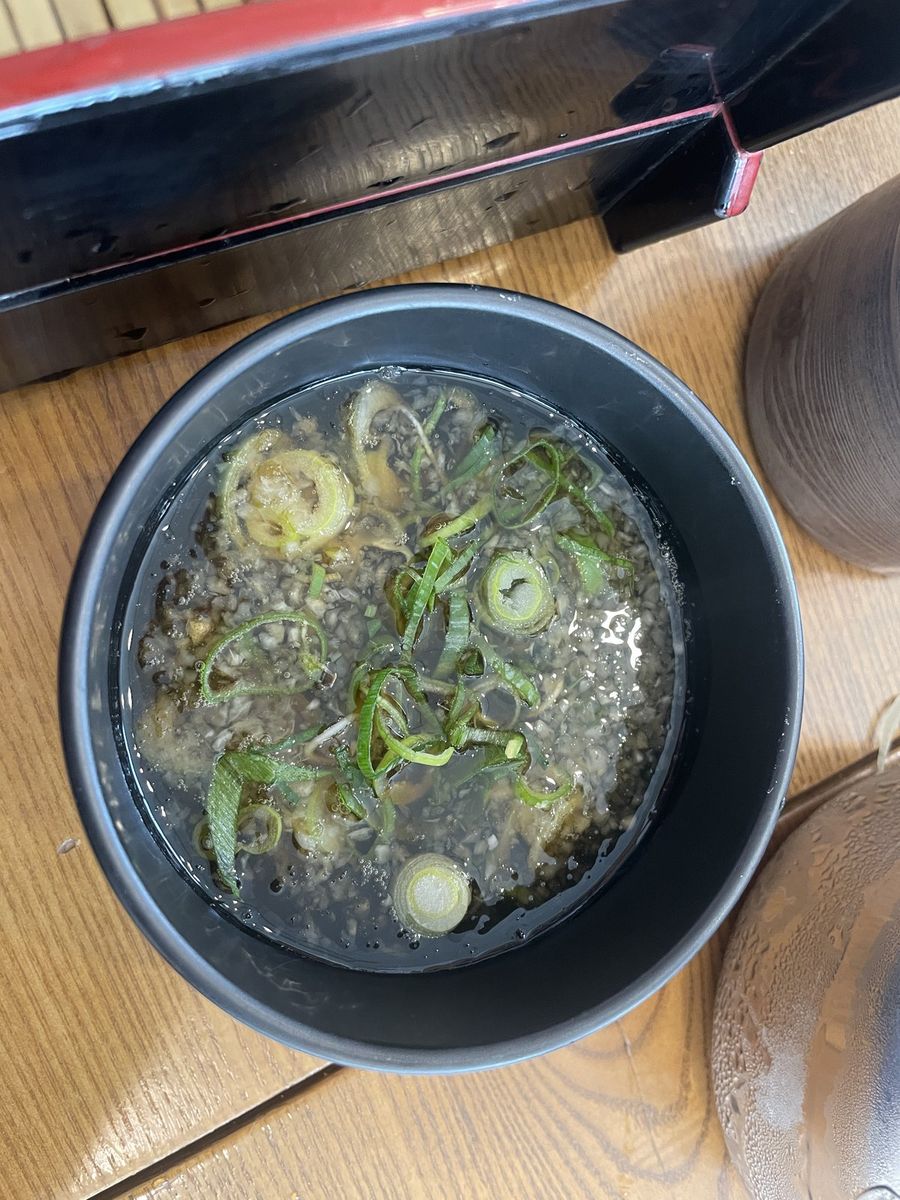
The kettle is not decoration, and it is not a different liquid — it is the same broth that is already in your bowl. That matters, because every round of noodles carries water in with it. The broth thins as you go and the bowl runs down well before the tray does. You top it back up, as often as you need. Nobody tells you this either. If you treat that first bowl as a fixed ration of sauce, you will spend the back half of lunch eating pale noodles and wondering why everyone else likes this.
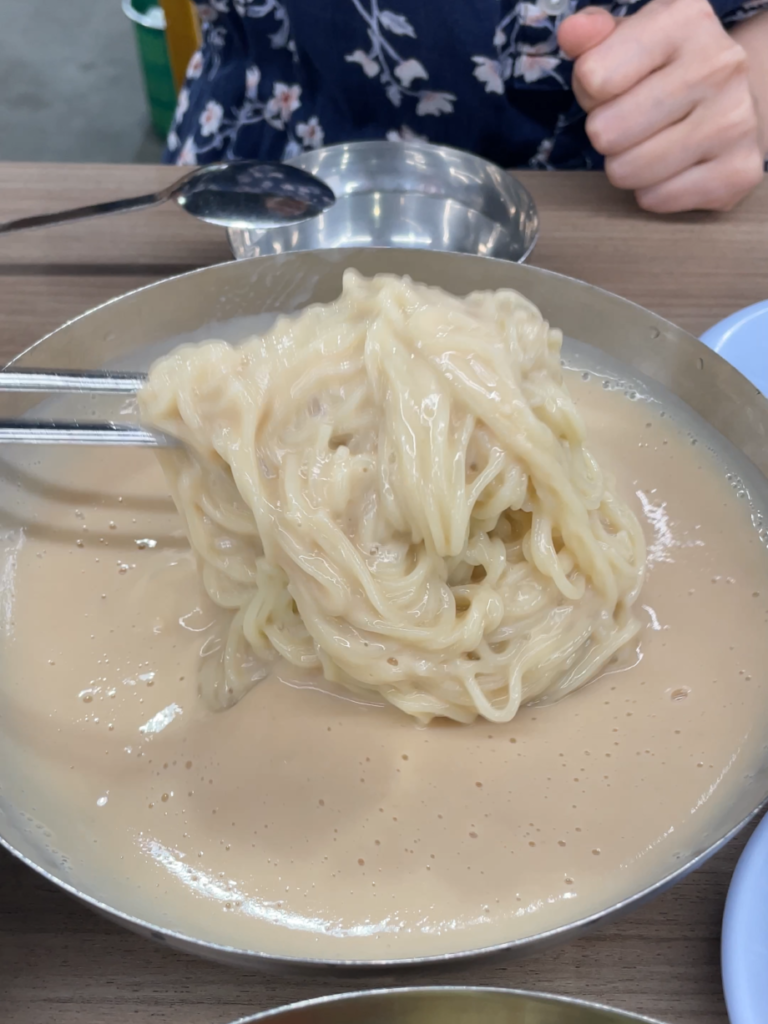
Naeng-momil comes already assembled. The noodles sit in cold broth with ice floating in it, topped with shredded vegetables, seaweed flakes, and half a soft-boiled egg. You eat it with a spoon and chopsticks and you drink the broth at the end.
Neither is a better version of the other. Pan-momil hands you the controls: how strong the broth is, how much radish goes in, when to refill. Naeng-momil decides all of it in the kitchen and gives you something cold to drink at the end. On a day where the air outside is thick, I want the second one.
This is a branch
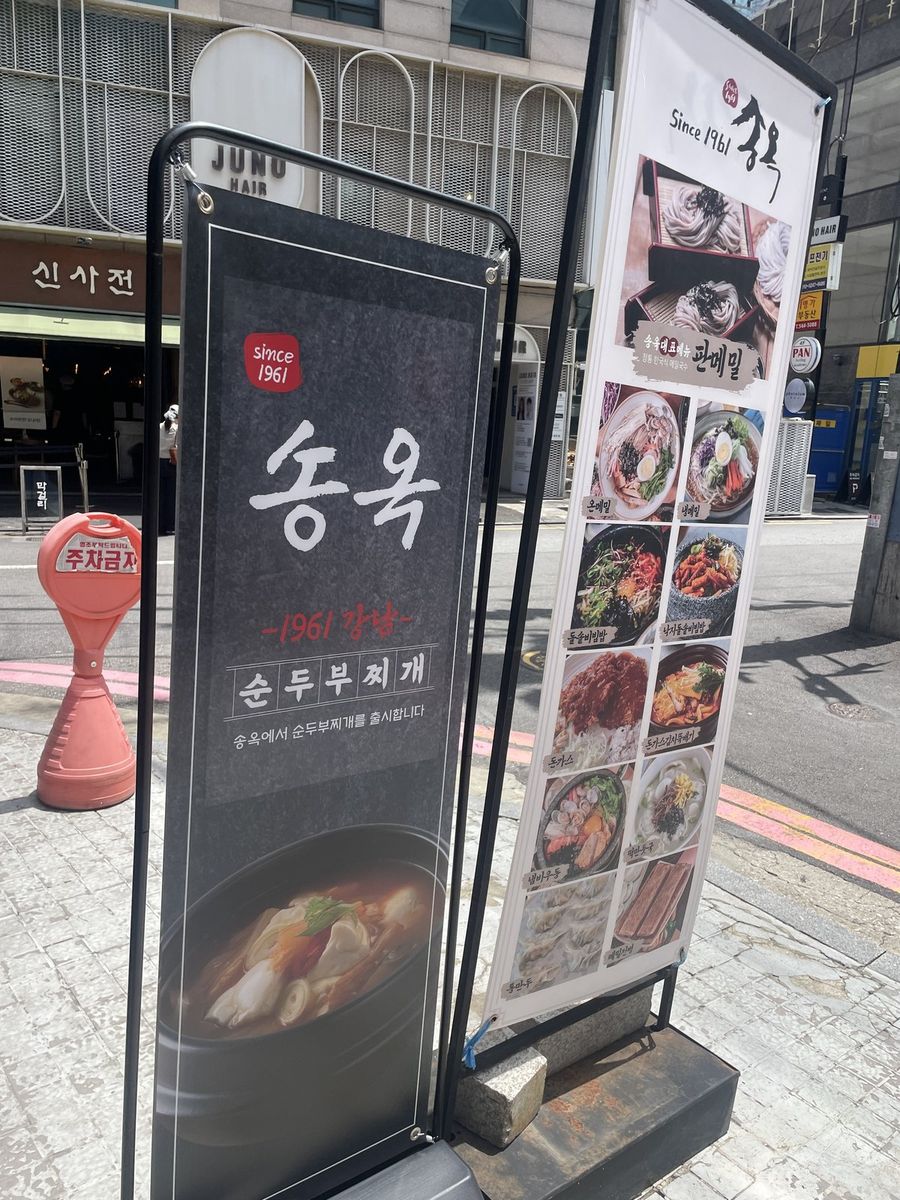
Songok’s original room is in Bukchang-dong, near City Hall. The sign says since 1961. The one I go to is the Garosu-gil branch, and there are others.
The price is not the same across them. Pan-momil is 11,000 won at the Bukchang-dong original and 12,000 won at this one. Same name, same dish, one thousand won apart, and no sign anywhere mentions it.
The branches matter for a second reason. The old momil houses in Seoul are mostly single rooms — Mijin in Gwanghwamun has one location and one line outside it. Songok spread out. So the wait here is shorter, not because fewer people want it, but because the same demand is split across several rooms. In summer you will still queue.
If you don’t want noodles
There is donkatsu for 12,000 won as well — a fried pork cutlet with demi-glace sauce, served with salad and rice. It is not the reason to come here, but it is the reason the person you came with will agree to come here.
What’s in it
Korean restaurants rarely list ingredients, and buckwheat noodle places are one of the worst cases for it, because the broth is doing a lot of quiet work.
- The noodles — buckwheat and wheat flour. A pure buckwheat noodle is unusual and is normally sold and priced as such. Assume both.
- The broth — in the kettle for pan-momil, already in the bowl for naeng-momil. Soy sauce, kelp, and dried fish, usually bonito or anchovy. This is not vegetarian. Nothing on the table looks like fish and no one will mention it.
- What you put in the bowl — chopped scallion and grated white radish, from the tubs kept on the table. These are not garnish. They go into the broth and end up in every bite: the radish takes the edge off the salt, the scallion sharpens it. Because you serve yourself from the tubs, this is the one part of the meal you have full control over. If raw onion is a problem for you, leave that tub alone and use only the radish.
- On the noodles — dried seaweed flakes. Naeng-momil also has half a soft-boiled egg and shredded raw vegetables.
- The side dishes — they arrive without being ordered: cheongpomuk, kimchi, and pickled white radish. Cheongpomuk is a jelly set from mung bean starch, cut into blocks and dressed here with crumbled dried seaweed, salt, and sesame oil. It is the one thing on the table that is actually vegetarian, so if the broth rules you out, that is where your protein-free lunch begins and ends.
- Donkatsu — pork, wheat breading, demi-glace sauce. I do not know whether the sauce contains dairy; demi-glace often does.
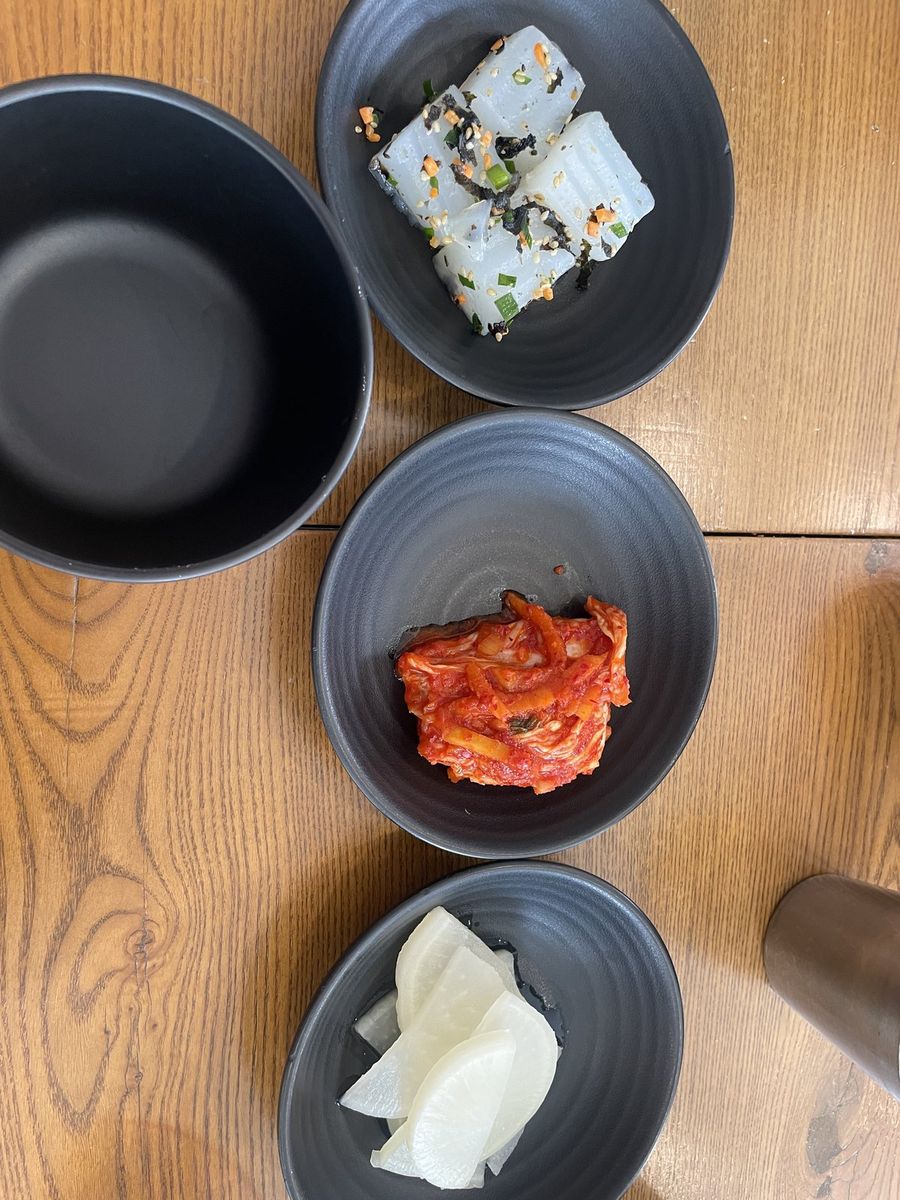
Likely allergens across the menu: buckwheat, wheat, soy, fish, egg, sesame, pork. The sesame is not only on the noodles — it is in the oil dressing the jelly.
The kimchi matters more than it looks. Korean kimchi is normally made with salted shrimp or fish sauce, so it is another place fish hides.
Buckwheat itself is worth flagging. In Korea and Japan it is treated as a serious allergen, and here it is the main ingredient, not a trace.
I am a customer, not the owner. This is what is normally in these dishes and what I could see on the table — not a guarantee about this kitchen.
Practical
- Address: 43 Gangnam-daero 154-gil, 2nd floor, Gangnam-gu
- Hours: 10:30–21:00 daily, last order 20:00
- Ordering: tablet on the table, in Korean
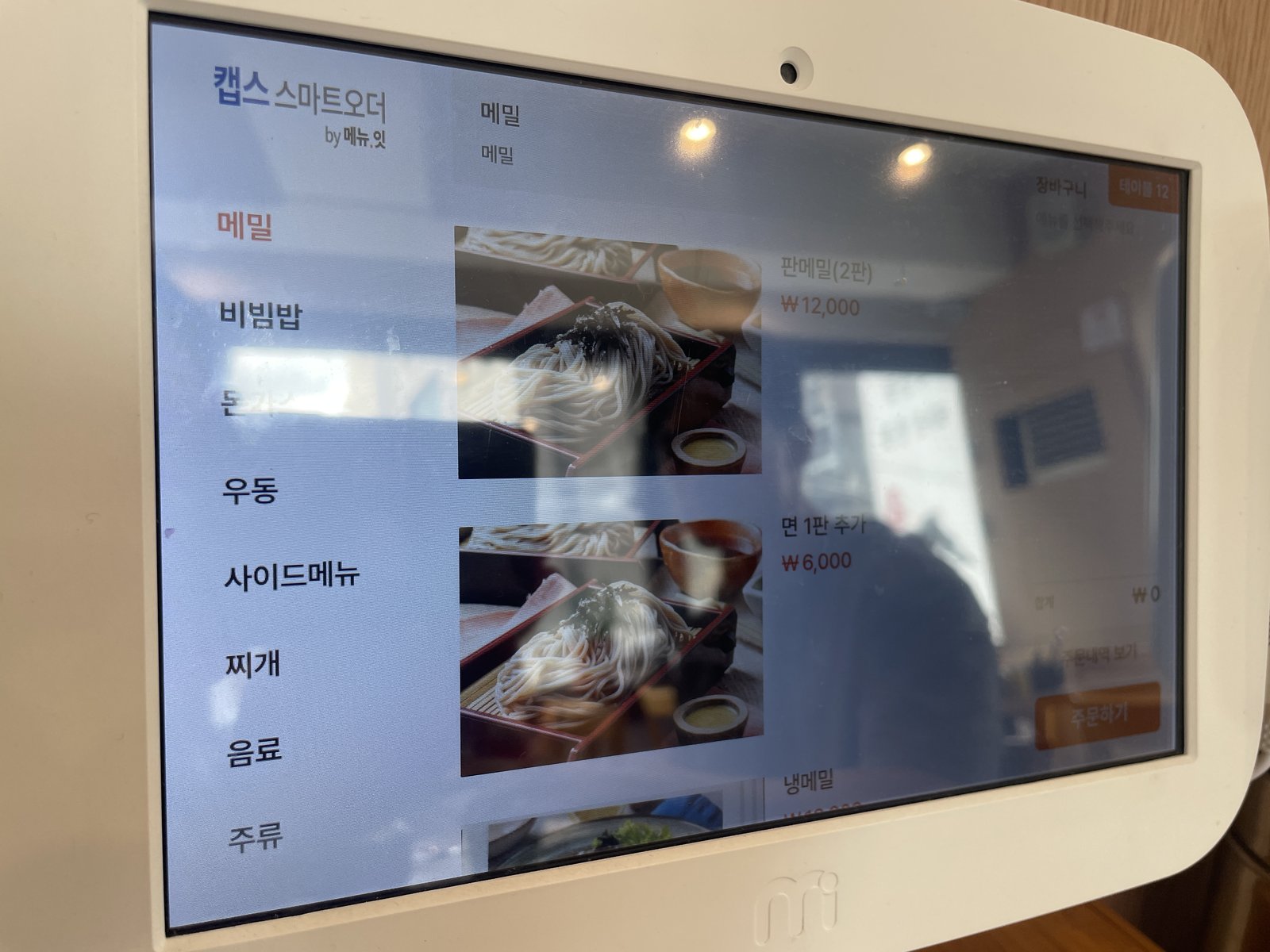
- Crowd: full at noon. The room is large and turns over fast, and on the day I went I did not wait long. In summer there is usually a line.
More
Songok is one of the names that comes up whenever Koreans argue about buckwheat noodles in Seoul. I have written separately about the dish itself — including why the word on the sign is the wrong word, and why nobody minds. → Momil Is Not Even the Correct Word. Every Restaurant in Seoul Uses It Anyway.