Gamja Means Potato in Korean. Gamjatang Is Mostly Bones.
Last month I took a friend from abroad to a gamjatang restaurant near my office. I told her gamja means potato in Korean. She looked into the pot for a long time. Then she asked where the potatoes were.
There was one. A small one, at the bottom, half falling apart.
I did not have a good answer for her. Koreans do not have one either.
The name nobody can explain
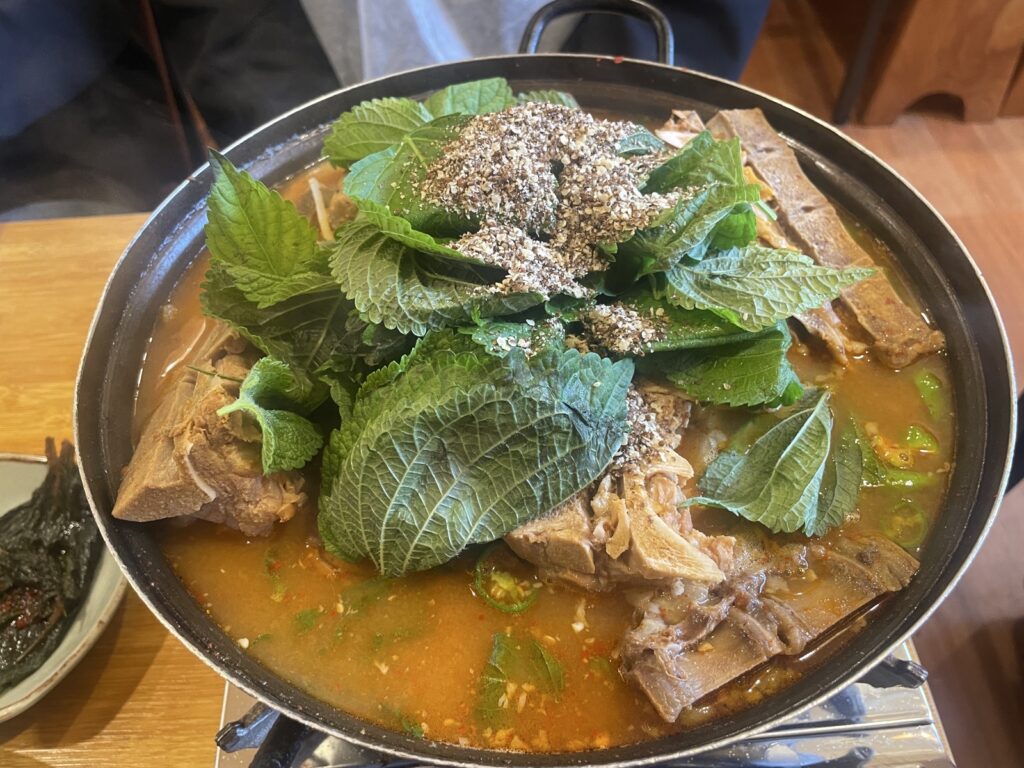
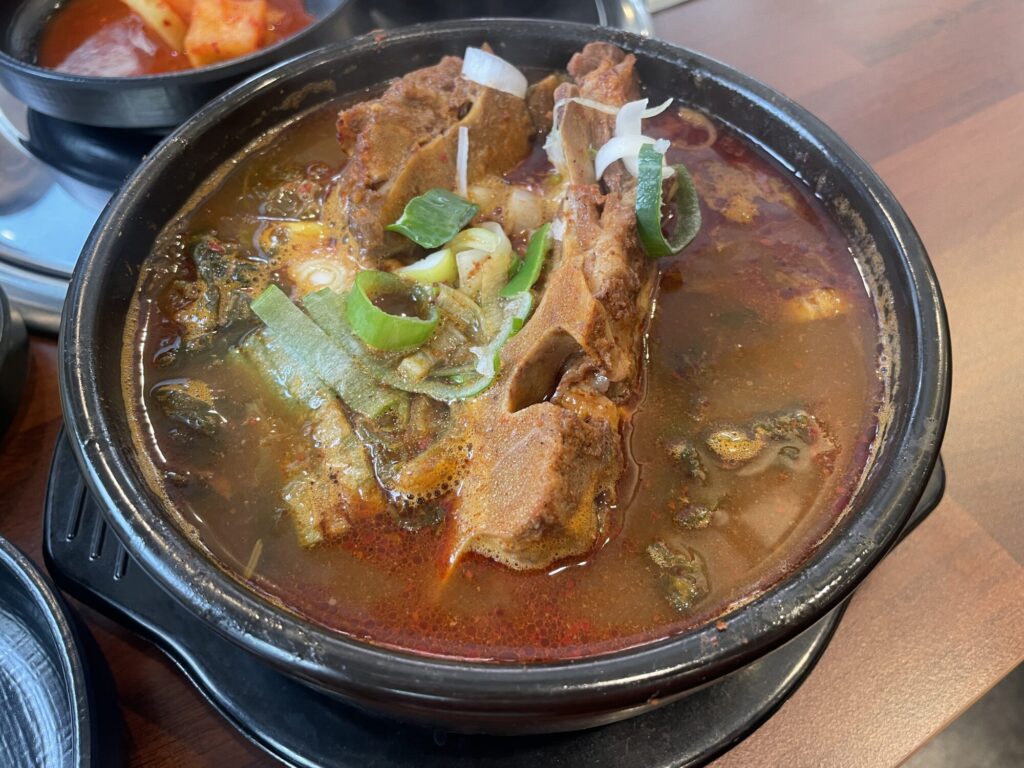
Gamjatang is a stew made from pork spine bones. The meat sits between the bones. The potato is a guest that sometimes does not come at all. Some restaurants put in one or two. Some put in none. Nobody complains.
So why is it called potato stew. There are two main theories. One says a part of the pig backbone was called gamja-ppyeo, potato bone, and the soup took its name from the bone, not the vegetable. The other says potatoes used to go in more in the old days, and the meat slowly became the main thing. Both sides have almost no records. The argument has been going for decades and it is still not settled.
What is more clear is who ate it. The dish is said to come from Jeolla province, where people raised many pigs. Around the end of the 1800s it spread to laborers building the railway near Incheon. Pork bones were cheap and the soup had many calories. It was a working person’s food. It still is.
What is in the pot
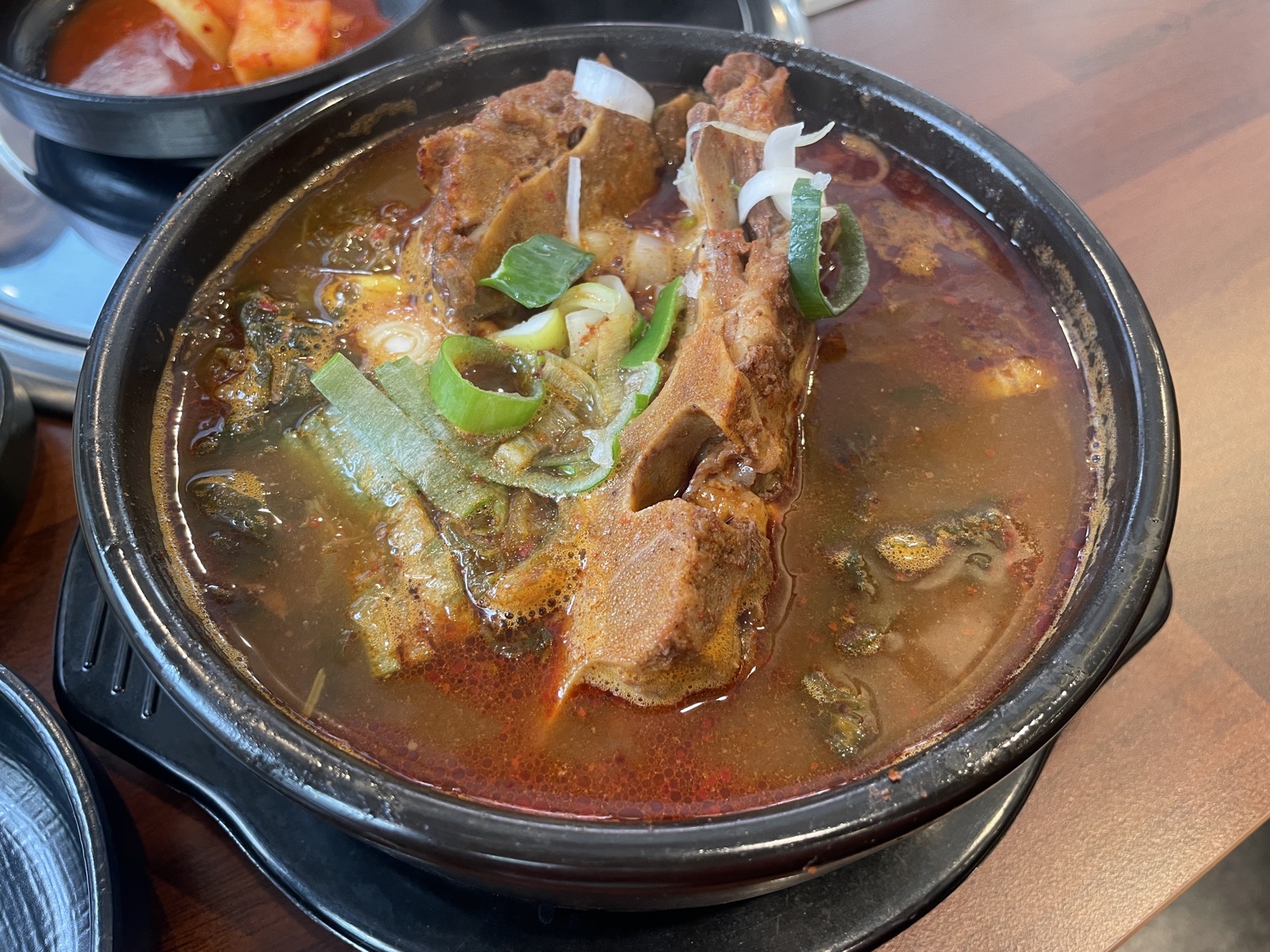
Pork spine or neck bones, boiled for hours. The broth is red and thick. It is spicy, but not only spicy. There is perilla seed powder in everything, so the soup tastes nutty and a little gritty. It is not a clean soup. It is not trying to be.
Then there is ugeoji. These are the tough outer leaves of napa cabbage, the part people used to throw away. Boiled long, they become soft and they soak up the broth. Many Koreans think the ugeoji is the best part of gamjatang. The meat people fight over. The leaves nobody fights over, but they disappear first.
A one-person bowl version is called ppyeo-haejangguk, bone hangover soup. It costs around 9,000 or 10,000 won. The full pot for sharing comes in small, medium, and large. Many gamjatang restaurants used to be open 24 hours, because the bones have to simmer all night anyway. It is a standard food after drinking.
At the end, you can fry rice in the leftover broth. Most tables do.
The bone is the hard part
The meat does not come off by itself. You hold a bone with chopsticks, or with your hands, and pull the meat out from around the joints. It takes patience. Koreans do this while talking, without looking down. We learned it as children.
I think this is the hard part for foreigners. Not the spice. The work. My friend held one bone for about five minutes, got very little meat, and gave up. Then she ate the ugeoji and said the leaves were the best part of the dish.
She is not wrong.
The name says potato. The bones do all the work.