Budae Jjigae Started With Leftover Army Food. Now We Pay Extra to Add More Spam.
At lunch, when my team orders budae jjigae, one person always controls the pot. She decides when the ramyeon goes in. If it goes in too early, the noodles get soft and the lunch is ruined. Nobody gave her this job. She took it, and we accept it.
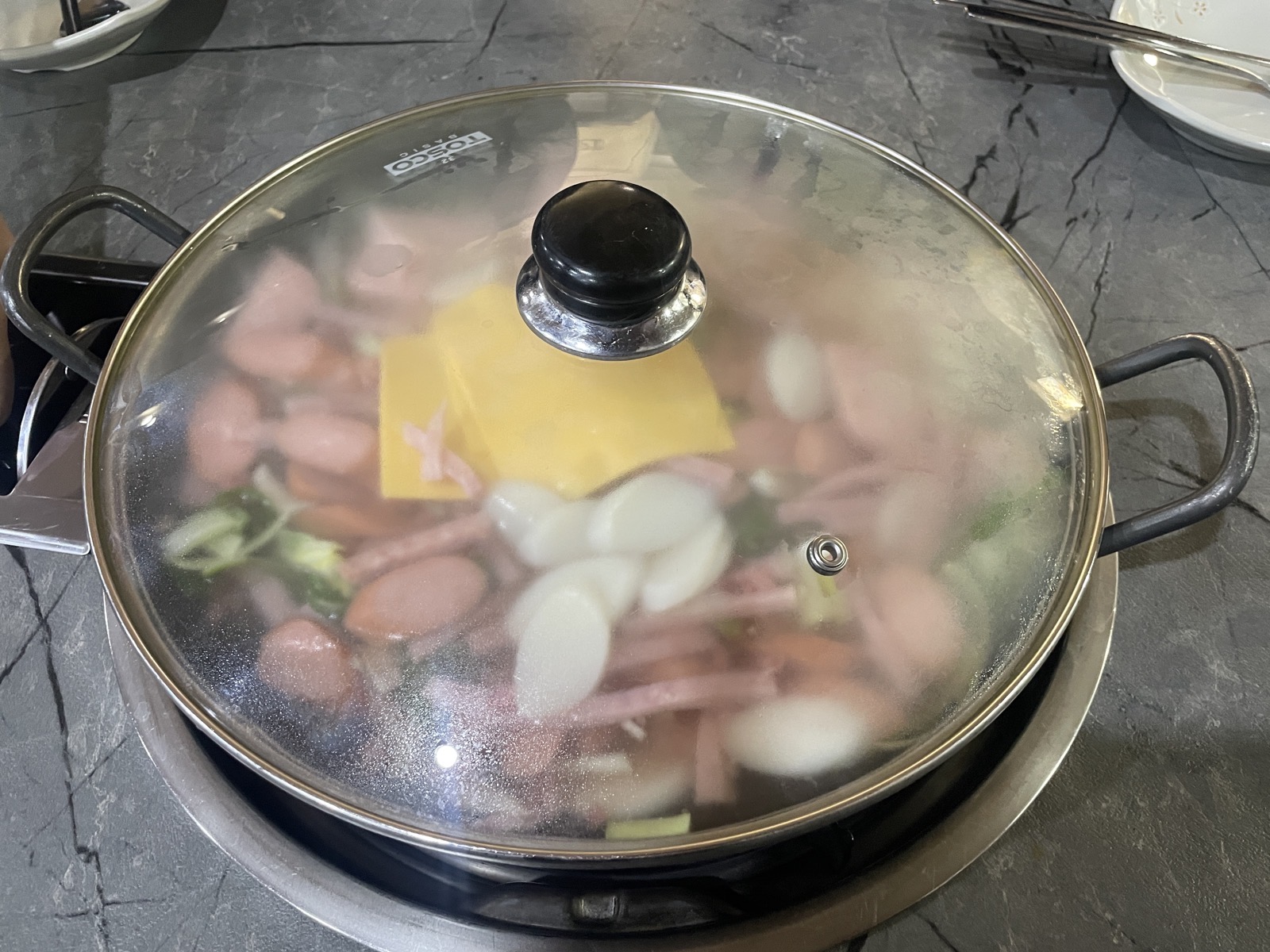
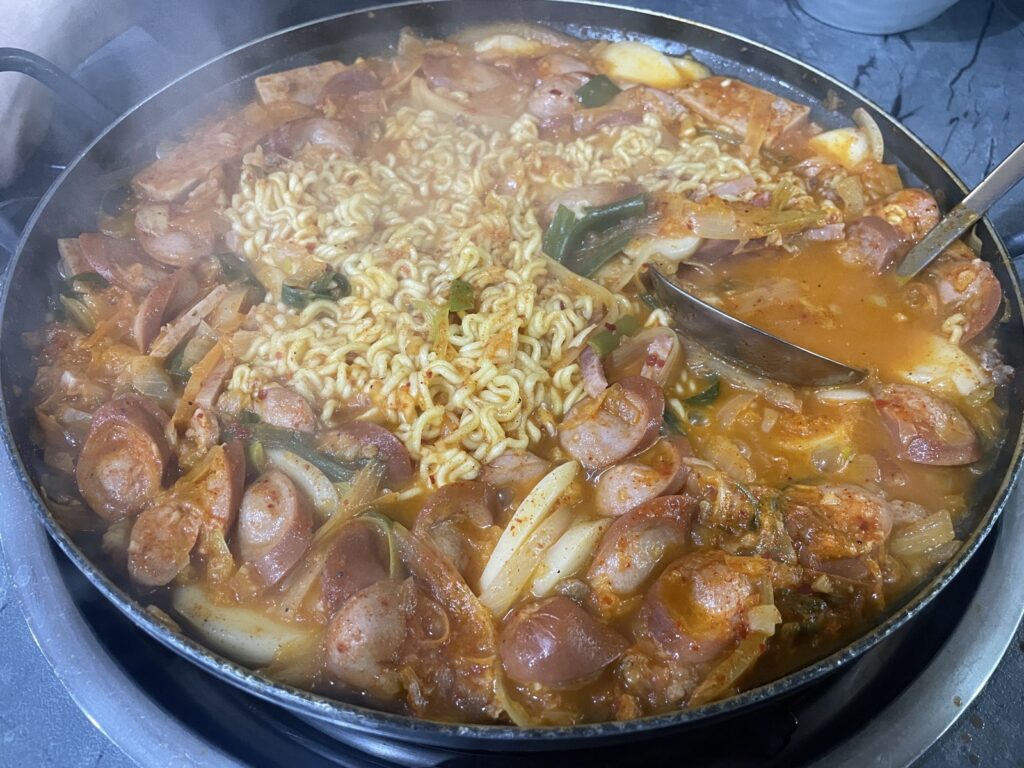
Budae jjigae means army base stew. It is a red kimchi stew with spam, sausage, ham, beans, and a slice of cheese on top, boiling in one wide pot in the middle of the table. It does not sound like it should work. It works.
It started with a war
After the Korean War, there was not much food in the country. Meat was rare. But around the US army bases, there was processed meat. Spam, sausage, canned ham. Some of it was surplus, some of it left the base in other ways.
People put that meat in a pot with kimchi and gochujang, the two things every Korean kitchen had. American meat, Korean broth. That is the whole invention.
For a while people even called it Johnson-tang, after the American president. The name did not survive. The stew did.
Why Uijeongbu and Pyeongtaek
The dish did not start in Seoul. It started where the bases were. Uijeongbu, north of Seoul. Dongducheon. Pyeongtaek, where the big base is now. The ingredients came out of the bases, so the restaurants grew around them.
Uijeongbu has a whole street of old budae jjigae restaurants. Some have been run by the same family for two or three generations.
And the two base towns went in two directions. Uijeongbu style is closer to kimchi jjigae. Spicy, clean broth, the meat is a guest. Songtan style, from Pyeongtaek, is heavier. More cheese, more beans, more American. Same war, different stew.
The sari system
Sari means the extra things you add to the pot. This is where budae jjigae becomes personal.
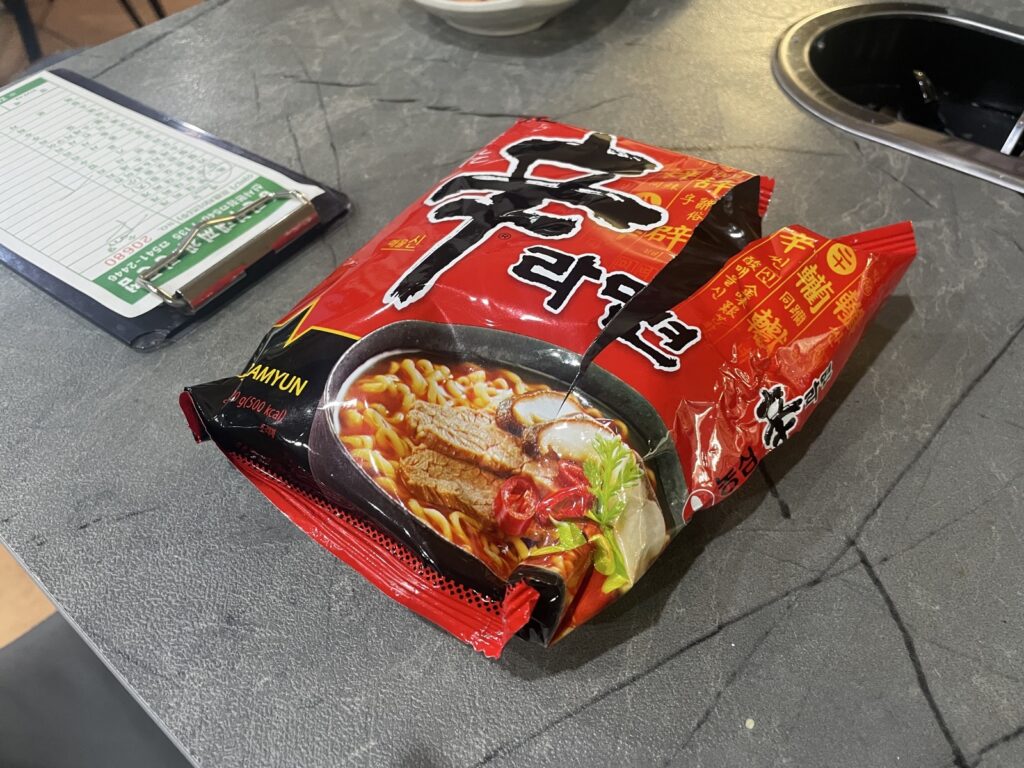
Ramyeon noodles are the most important sari. Around 2,000 won. There is also tteok, glass noodles, extra spam, extra cheese. You order them at the start, but you add them at the right time. The ramyeon goes in near the end, and it must come out before it gets soft. This is why someone has to control the pot.
The stew comes with rice, but honestly, the ramyeon is the main carb. The rice is for the end, with the last of the broth.
Every shop is different
There is no standard budae jjigae. Some shops put minced pork. Some put a lot of beans, some put none. Some broths are almost sweet, some are just kimchi and pain. The spam ratio changes everything.
So Koreans have their own budae jjigae place, and they defend it. Telling someone their place is average is a small insult.
It is usually around 10,000 to 13,000 won per person, and most places want you to order at least two servings. This is not a dish for eating alone. The pot is too wide.
It was food for people who had nothing. Now we order it when we want everything in one pot.